

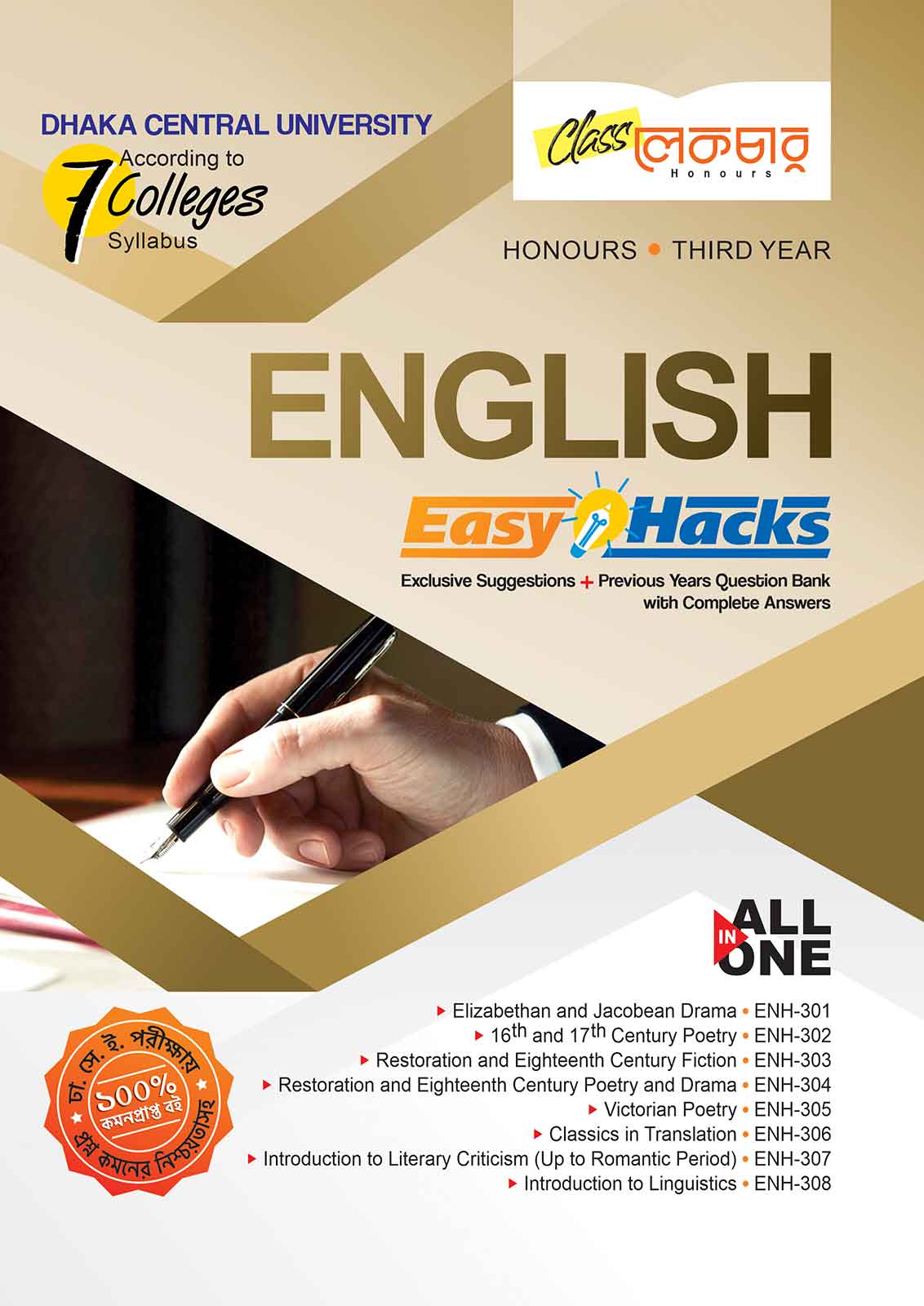
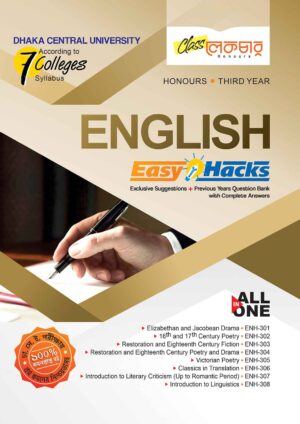
Included Subjects: Elizabethan and Jacobean Drama, 16th & 17th Century Poetry, Restoration and Eighteenth Century Fiction, Restoration and Eighteenth Century Poetry and Drama, Victorian Poetry, Classics in Translation, Introduction to Literary Criticism, and Introduction to Linguistics.
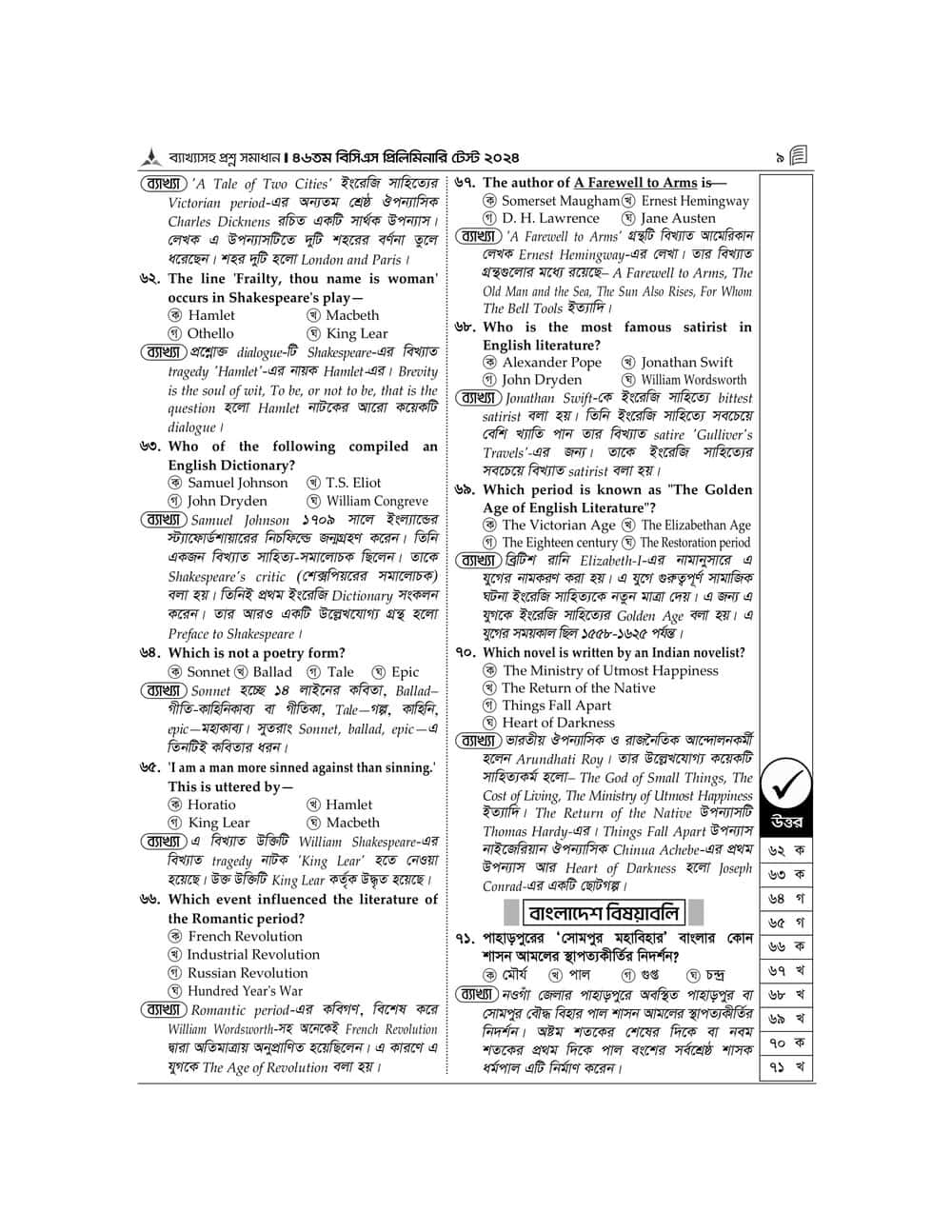
This English Literature supplementary book presents the important areas of English literature, drama, poetry, fiction, literary criticism, and linguistics in a simple, clear, informative, and exam-oriented manner. The major literary periods, movements, characteristics, themes, concepts, and analytical aspects are organized systematically so that students can understand the core topics of their syllabus and prepare effectively for examinations.
The Elizabethan and Jacobean Drama section introduces students to the rich dramatic tradition of the Elizabethan and Jacobean periods. It discusses important features of drama, human character, dramatic conflict, themes, language, and literary techniques. The 16th & 17th Century Poetry section provides an overview of the major characteristics, themes, poetic styles, language, and historical and literary contexts of poetry from these important periods.
The Restoration and Eighteenth Century Fiction section explores the representation of society, individuals, changing values, manners, and contemporary life through fiction. Alongside this, Restoration and Eighteenth Century Poetry and Drama discusses the development of poetry and drama during the period, their major characteristics, themes, literary techniques, and connections with the social and cultural environment of the time.
The Victorian Poetry section focuses on the poetic expression of nineteenth-century society, beliefs, morality, religious ideas, social changes, and human conflicts. Classics in Translation broadens students’ literary understanding by introducing important works of world literature and connecting English literature with wider literary traditions.
The Introduction to Literary Criticism section explains the fundamental concepts of literary criticism, major critical approaches, methods of literary evaluation, and essential aspects of analytical reading. Finally, Introduction to Linguistics provides a systematic understanding of language, its structure, nature, functions, sounds, words, sentences, and other fundamental areas of linguistic study.
Overall, English Literature creates a well-organized connection among literature, drama, poetry, fiction, criticism, and linguistics. Each subject is presented in a point-based, easy-to-understand, and examination-focused format, allowing students to grasp important concepts within a short time and revise efficiently. As a result, English Literature can serve as an effective supplementary resource for regular study, subject-based preparation, quick revision, and writing well-structured answers in examinations.















Reviews
There are no reviews yet.